Source Spot Welding Commutator Fusing Machine for Motors
Find reliable spot welding commutator fusing machine options for electric motor assembly, transformer manufacturing, and battery pack production. Compare 30 listings from Chinese suppliers to identify suitable models for your industrial needs; compare the available evidence and request quotations based on your requirements.
Key considerations
Products List


Comprehensive Sourcing Guide
Spot Welding Commutator Fusing Machine Sourcing Guide
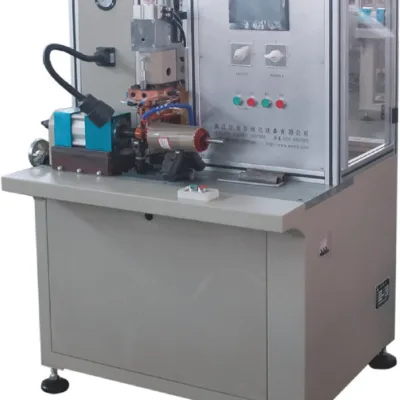
Procurement of spot welding commutator fusing machines requires careful alignment between the specific commutator geometry and the machine's electrode stroke capabilities. Buyers must verify that the vertical electrode stroke and conductive way match the physical constraints of the commutator assembly to ensure consistent fusion. The observed market data indicates a prevalence of machines with dual welding spots, which can significantly enhance throughput for high-volume commutator production lines.
When evaluating listings, the distinction between single-item selling units and bulk supply capabilities is critical for operational planning. The available supply chain data suggests a monthly capacity of approximately 30 sets, which may constrain immediate large-scale deployment. Buyers should prioritize suppliers who explicitly confirm their ability to meet specific production timelines, as the standard lead times and production volumes vary significantly across different manufacturers in the region.
Product Scope and Observed Listing Signals
The product scope for these machines encompasses a wide range of welding types, including spot, seam, butt, and nut welding, offering versatility for diverse commutator manufacturing needs. Listings frequently highlight the use of aluminum alloy materials for structural components, which contributes to a manageable weight of around 485 kg while maintaining rigidity. The observed voltage ratings of 220V and current capacities up to 1200A indicate suitability for both standard industrial facilities and specialized high-power applications.
Buyers should scrutinize the listed dimensions and packaging details, as the physical footprint of 10309301450 mm requires specific floor space allocation. The packaging is typically described as plywood or wooden boxes, which is essential for protecting the precision components during international transit from ports like Ningbo. Understanding these physical constraints helps in planning factory layout and logistics, ensuring the machine fits within the designated installation area without requiring costly structural modifications.
Technical Specifications to Verify
Technical verification must focus on the rated capacity and duty cycle, as these parameters directly dictate the machine's thermal management and operational endurance. The observed data shows a wide variance in rated capacities, ranging from 32kVA to 350kVA, with duty cycles as low as 5% to 10%. Buyers must confirm that the selected unit's duty cycle aligns with the required production speed to prevent overheating during continuous commutator fusing operations.
The welding thickness range and wire diameter specifications are equally critical for ensuring the machine can handle the specific material gauges of the commutator segments. Listings indicate a welding thickness capability from 0.02mm to 9.0mm and wire diameters between 0.12mm and 1.2mm, covering a broad spectrum of industrial requirements. It is imperative to validate that the maximum output current and frequency range of 1-5kHz are sufficient for the specific alloy composition and thickness of the commutator being processed.
Compliance and Safety Documentation
Compliance verification is essential to ensure the equipment meets international safety standards, particularly regarding electrical safety and operational hazards. The observed certifications include CE and ISO, which are fundamental indicators of adherence to European and international quality management systems. Buyers should request specific test reports and compliance certificates to confirm that the machine's electrical systems, including the line frequency and secondary rectification, meet the safety regulations of the destination country.
Safety documentation must also cover the cooling systems and emergency stop mechanisms, as high-current welding generates significant heat. The water cooling method observed in several listings requires a dedicated water supply and drainage system, which must be integrated safely into the facility. Procurement teams should verify that the supplier provides comprehensive manuals detailing the operation of the cooling system and the maintenance procedures required to prevent thermal failures or electrical hazards during extended use.
Cost Drivers and Commercial Terms
Cost drivers for these machines are heavily influenced by the rated capacity, the complexity of the inverter technology, and the customization options available. The price range observed in the market spans from 10 to 100,000 USD, reflecting the difference between basic models and high-power precision inverter DC resistance welders. Buyers should analyze the total cost of ownership, including energy consumption and maintenance, rather than focusing solely on the initial purchase price.
Commercial terms such as the minimum order quantity and warranty conditions play a vital role in the financial planning of the procurement. The standard MOQ is often one set, which allows for flexible purchasing, while a one-year warranty provides a baseline for after-sales support. Buyers must clarify the terms for extended warranties and the scope of online or video support to ensure that technical assistance is available should any operational issues arise during the initial deployment phase.
Supplier Qualification and Quality Control
Supplier qualification requires a thorough assessment of their manufacturing location and production history, as the origin of the machine impacts quality consistency. The observed data points to origins in Zhejiang and Guangdong, China, regions known for their industrial manufacturing capabilities. Buyers should verify the supplier's production history and request references from previous clients who have purchased similar spot welding machines for commutator applications.
Quality control processes must be validated through the supplier's internal testing protocols and the availability of pre-shipment inspections. The condition of the machines is listed as new, but buyers should insist on detailed inspection reports that verify the integrity of the aluminum alloy frame and the precision of the electrode stroke. Establishing a clear quality agreement that defines acceptable tolerances and performance metrics is essential to mitigate the risk of receiving equipment that does not meet the required operational standards.
Long-Term Procurement Checks
Long-term procurement checks should focus on the availability of spare parts and the longevity of the machine's critical components. The cooling system and electrode assemblies are high-wear items that require regular replacement, so buyers must confirm the supplier's ability to provide these parts within a reasonable timeframe. Ensuring a steady supply chain for consumables is crucial to maintaining uninterrupted production schedules and minimizing downtime.
Buyers should also establish a protocol for periodic performance reviews and software updates, especially for machines with advanced inverter technology. The customization options available suggest that the machine can be adapted to future production needs, but this requires a clear understanding of the upgrade path and associated costs. Regular maintenance schedules and the availability of technical support are key factors in ensuring the machine remains a reliable asset for the commutator fusing process over its entire lifecycle.
FAQs
What is the maximum output current for this spot welding machine?
The maximum output current reaches 1200A on the primary side. This high capacity supports efficient welding of thicker materials within the specified thickness range. The machine utilizes line frequency electric current to ensure stable performance during continuous industrial operations.
Can the machine handle different welding thicknesses effectively?
Yes, the device supports welding thicknesses from 0.02mm to 8.0mm. This versatile range allows for precise joining of thin foils and slightly thicker sheets. The adjustable parameters ensure consistent weld quality across various material types and thickness requirements.
What certifications does this spot welding commutator fusing machine have?
The equipment holds CE and ISO certifications. These standards confirm compliance with international safety and quality regulations. Buyers can rely on these documented credentials for regulatory approval in various global markets and for meeting strict industrial safety requirements.
How is the machine packaged for safe shipping?
The unit is packed in a sturdy plywood box or wooden box. This robust packaging protects the 485kg machine from damage during transit. The dimensions of 1030x930x1450mm are accounted for in standard logistics planning to ensure secure delivery to the destination port.
What after-sales support is provided for this welding equipment?
Online or video support is available for troubleshooting and maintenance. This service helps resolve operational issues quickly without requiring immediate on-site visits. Buyers benefit from remote assistance to minimize downtime and ensure the machine continues to operate efficiently.
Is customization available for this spot welding machine model?
Customization is available to meet specific production requirements. Buyers can request adjustments to color and other specifications to fit their facility needs. This flexibility ensures the machine integrates seamlessly into existing workflows while maintaining its core high-efficiency welding capabilities.